Piping Flanges and Fittings Explained as per Industry Practice
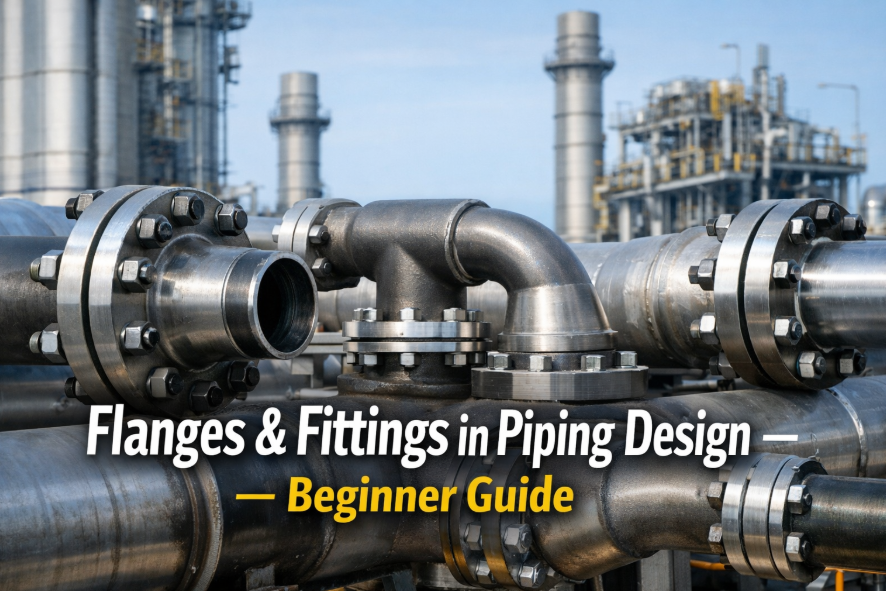
Industrial piping system showing flanges and fittings including weld neck flanges, elbows, and reducers used in piping design for power plants and refineries

Understand flanges and fittings in piping engineering with this detailed beginner guide. The article explains piping class, flange ratings, design pressure, design temperature, and material specifications clearly. Real-world plant examples help you learn correct flange and fitting selection. Perfect for learning piping design basics as per industry practice. Introduction: Why Flanges & Fittings Matter in … Read more
Pipe Thickness in Piping Design (ASME B31.3 Explained)

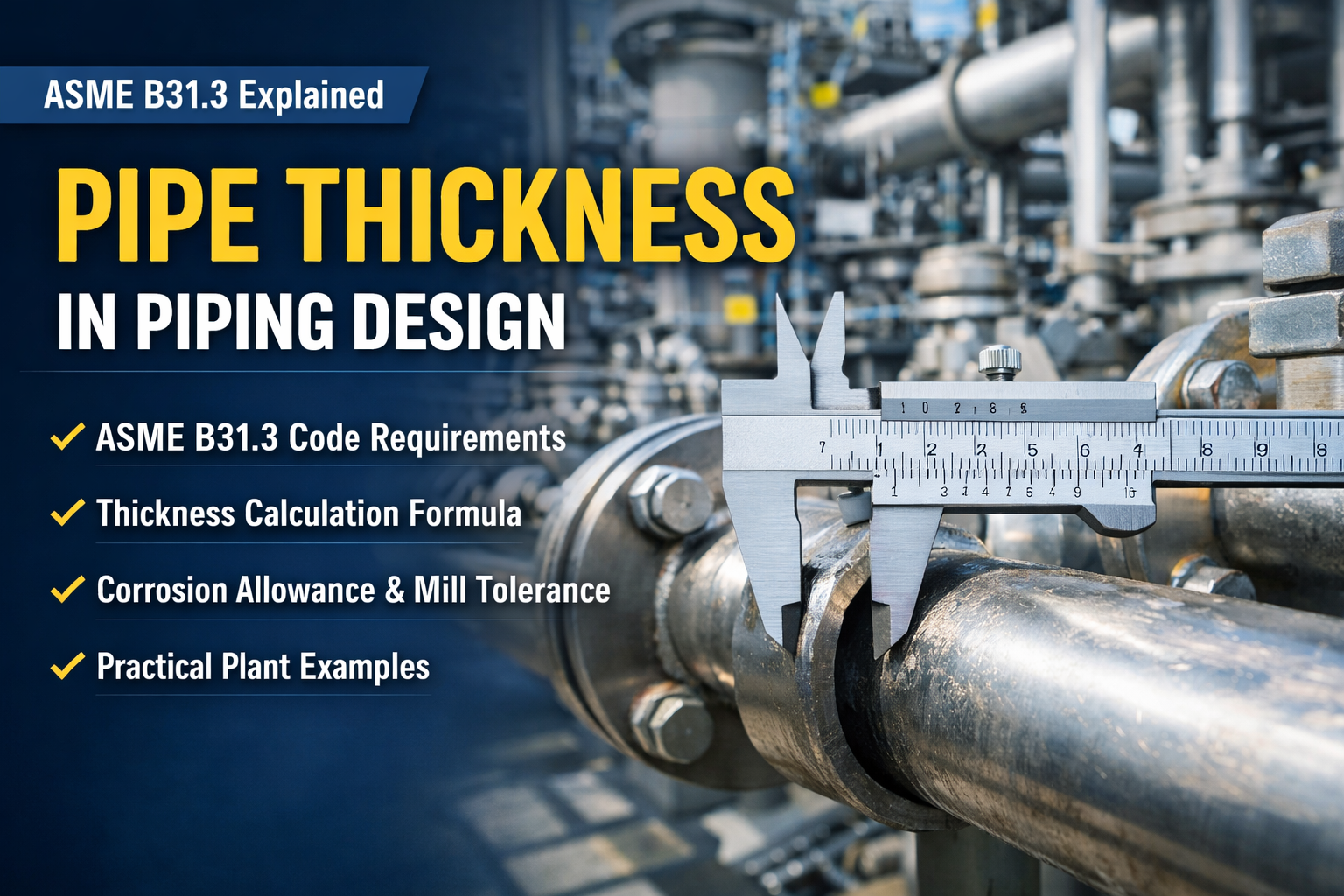
Pipe thickness measurement using vernier caliper on industrial piping system, illustrating ASME B31.3 pipe thickness requirements in piping design

Introduction In piping design, selecting the correct pipe thickness is one of the most fundamental engineering tasks. Pipe thickness directly affects pressure containment, mechanical strength, corrosion life, safety, and project cost. In Oil and Gas Piping, chemical plants, refineries, and power plants, pipe thickness is not chosen arbitrarily. It is calculated using ASME B31 codes, … Read more

What is Line Designation in Piping Design? Complete Guide for Engineers

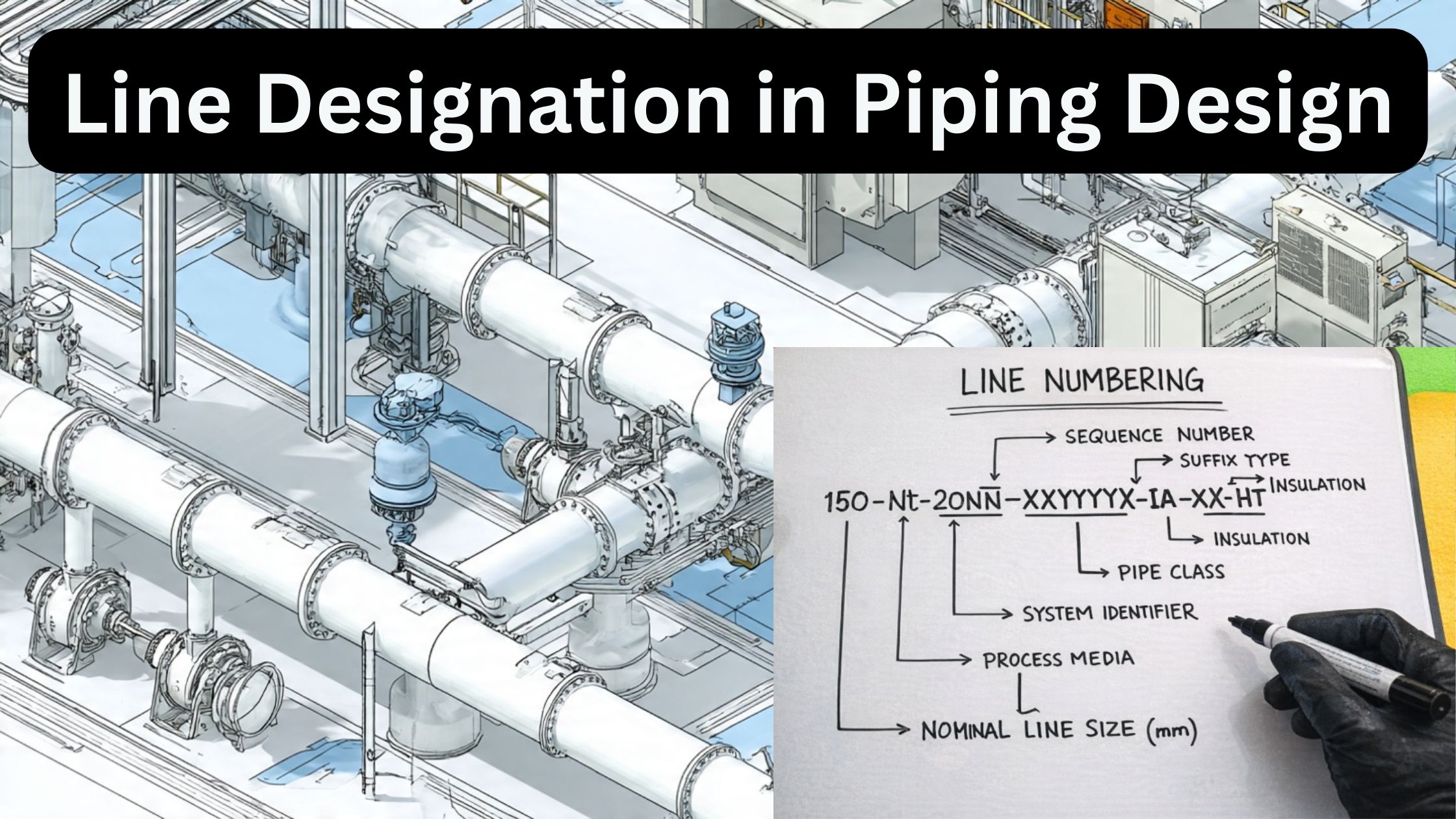
Hand-drawn piping line designation diagram showing line numbering system with pipe size, process media, system identifier, piping class, sequence number, and insulation details.

Introduction In piping design and piping engineering, correct identification of every pipeline is extremely important. In large plants such as oil & gas facilities, chemical plants, refineries, and power plants, thousands of pipelines carry different fluids under different pressures and temperatures. To manage this complexity, piping engineers use a Line Designation system, also known as … Read more