Pipe Thickness in Piping Design (ASME B31.3 Explained)
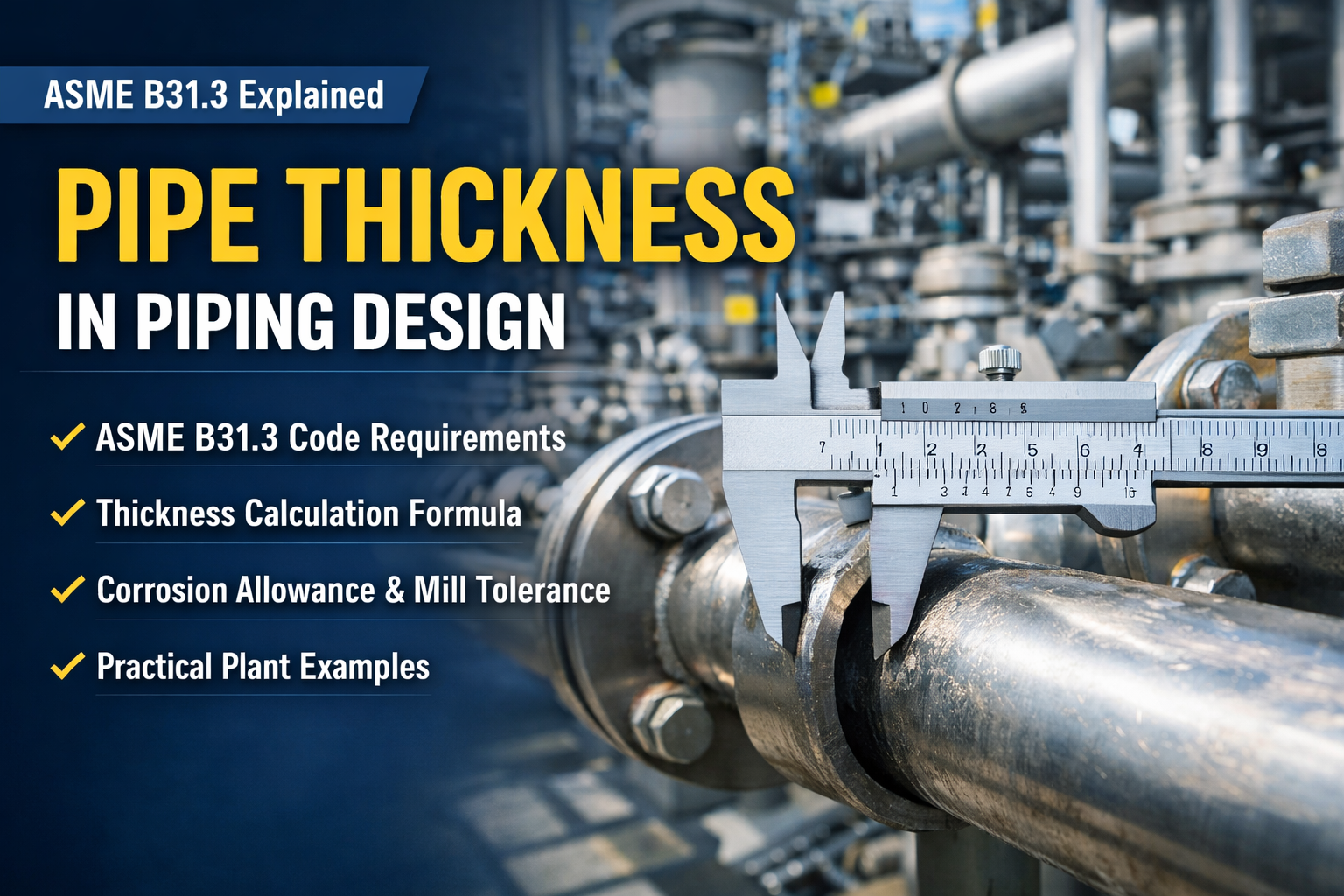
Pipe thickness measurement using vernier caliper on industrial piping system, illustrating ASME B31.3 pipe thickness requirements in piping design

Introduction In piping design, selecting the correct pipe thickness is one of the most fundamental engineering tasks. Pipe thickness directly affects pressure containment, mechanical strength, corrosion life, safety, and project cost. In Oil and Gas Piping, chemical plants, refineries, and power plants, pipe thickness is not chosen arbitrarily. It is calculated using ASME B31 codes, … Read more
Piping Components Basics: A Practical Guide for Junior Piping Engineers

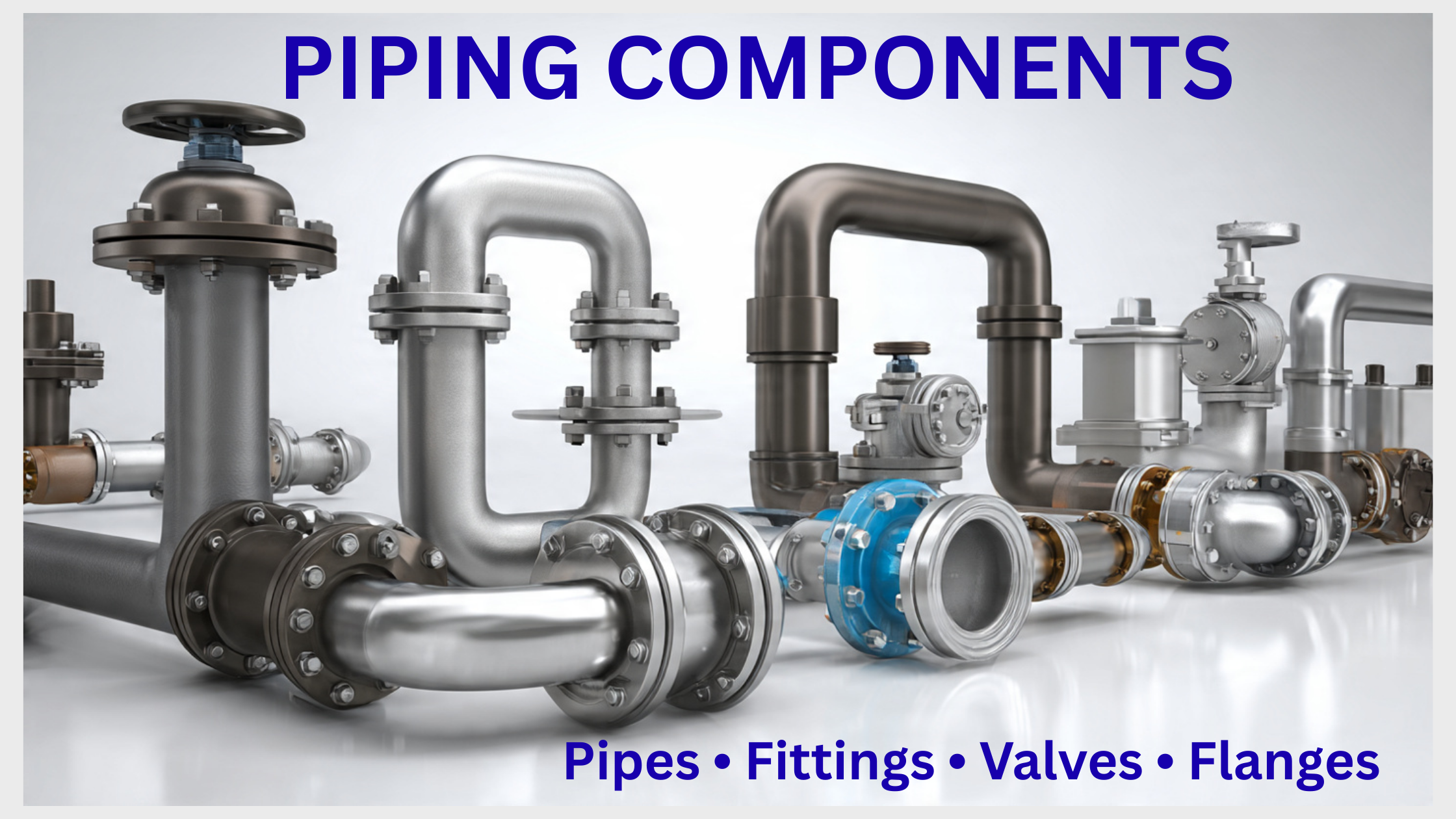
Industrial piping components including pipes, fittings, flanges, elbows, and valves used in process plant piping systems

When you first step into a plant site or start reading piping drawings, everything may look confusing—pipes going everywhere, strange symbols on drawings, and many unfamiliar names. Over time, you realize that a piping system is not just pipes. It is a collection of piping components, each with a specific role. Understanding piping components is … Read more