
ASME B31.1 Pressure Design Explained: Pipe Thickness Calculation & Corrosion Allowance for Power Piping
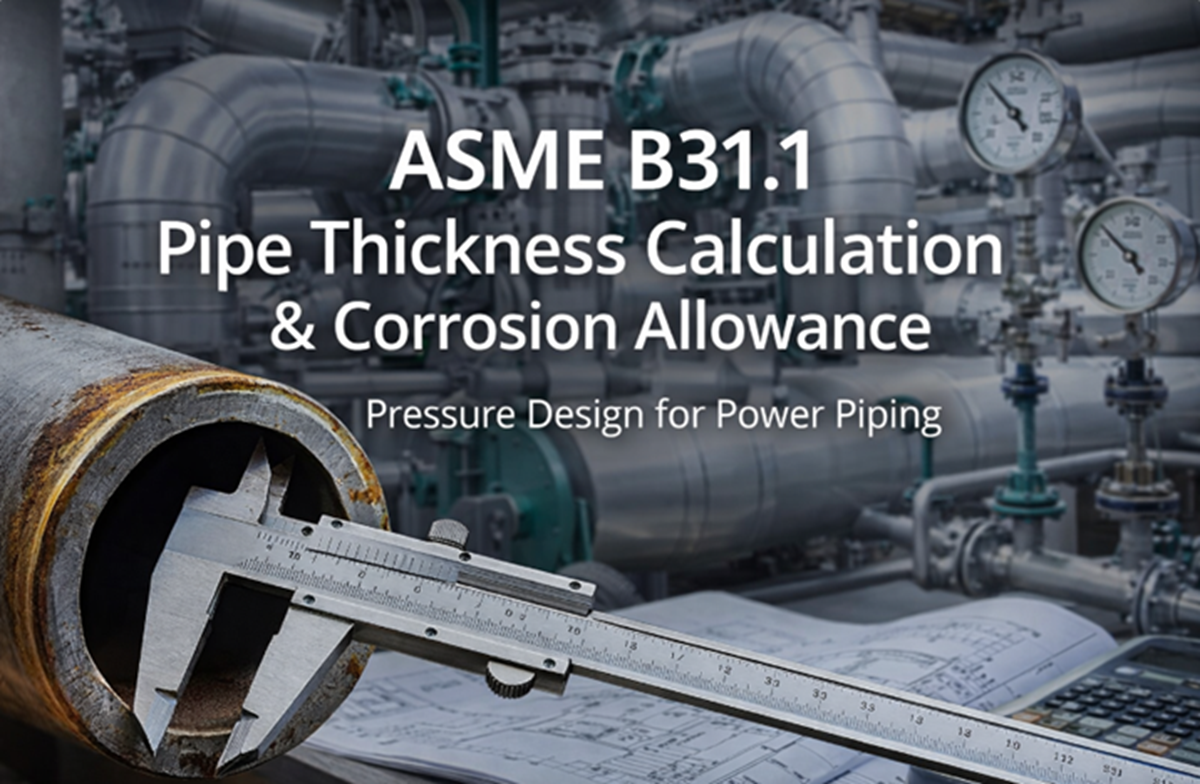
ASME B31.1 power piping system showing pipe thickness calculation and corrosion allowance for pressure design in power plants

Learn how pipe wall thickness is calculated under ASME B31.1. Understand pressure design, corrosion allowance, mill tolerance, and real plant examples from main steam and boiler feedwater piping. Introduction In piping engineering, pipe thickness is not chosen randomly, nor is it based only on experience or “what worked before.”In power plants, refineries, oil & gas … Read more
Pipe Thickness in Piping Design (ASME B31.3 Explained)

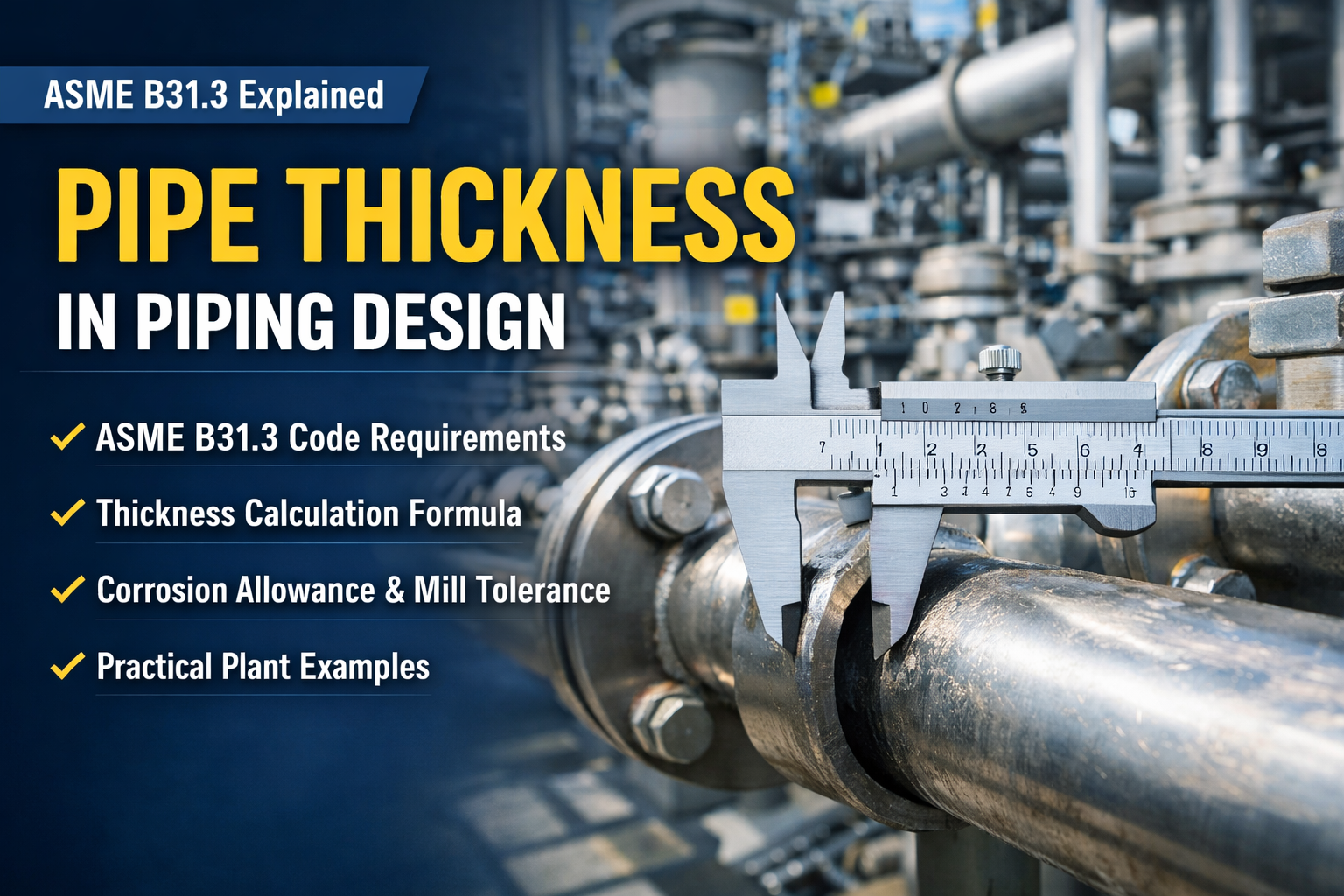
Pipe thickness measurement using vernier caliper on industrial piping system, illustrating ASME B31.3 pipe thickness requirements in piping design

Introduction In piping design, selecting the correct pipe thickness is one of the most fundamental engineering tasks. Pipe thickness directly affects pressure containment, mechanical strength, corrosion life, safety, and project cost. In Oil and Gas Piping, chemical plants, refineries, and power plants, pipe thickness is not chosen arbitrarily. It is calculated using ASME B31 codes, … Read more

NPS, DN, and Schedule – Complete Guide for Piping Engineers

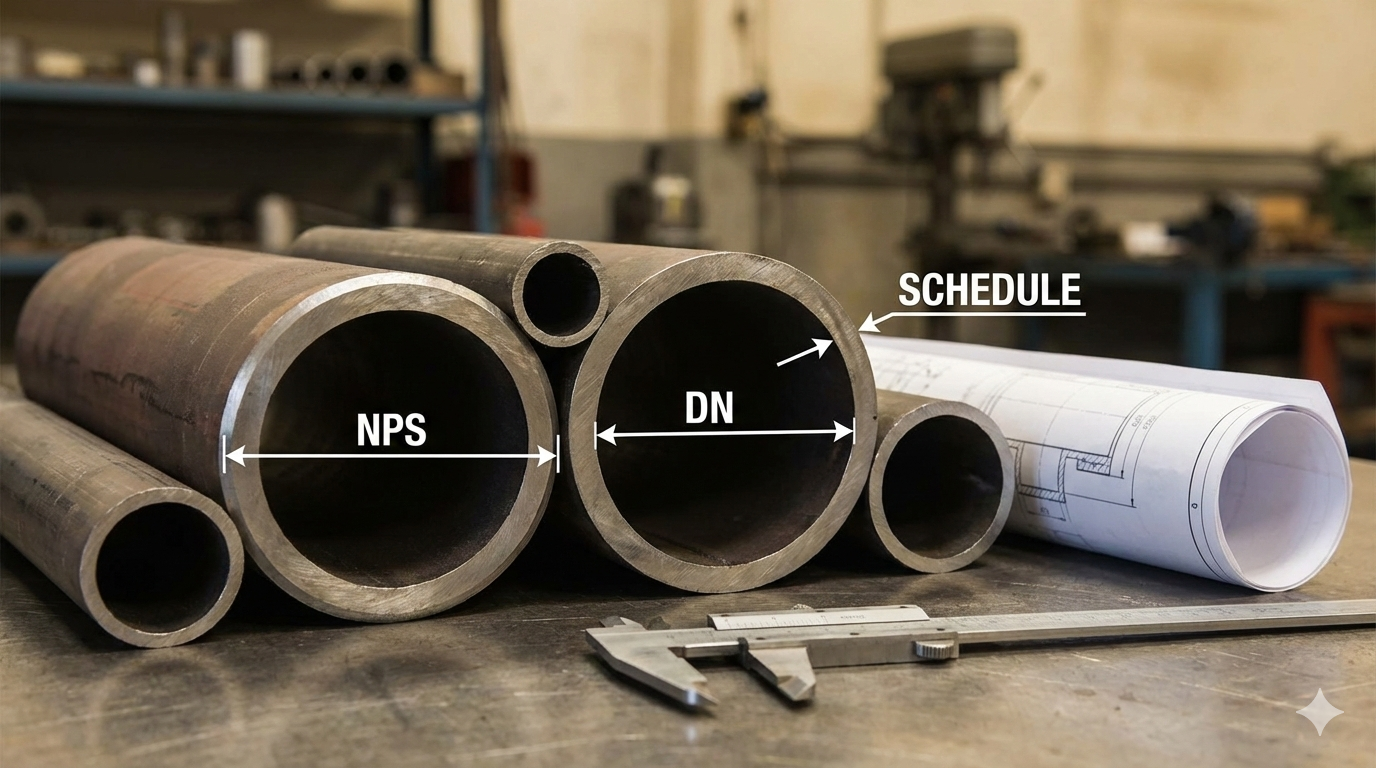
NPS to DN pipe size conversion table with outside diameter

If you are new to piping engineering, or even if you are working in the field for a few years, you will often hear terms like NPS, DN, and Schedule. Many beginners get confused and sometimes even experienced engineers mix these terms during discussions. I will explain NPS, DN, and Pipe Schedule in a very … Read more