Piping Isometrics Step-by-Step Guide for Beginners | ASME B31.1
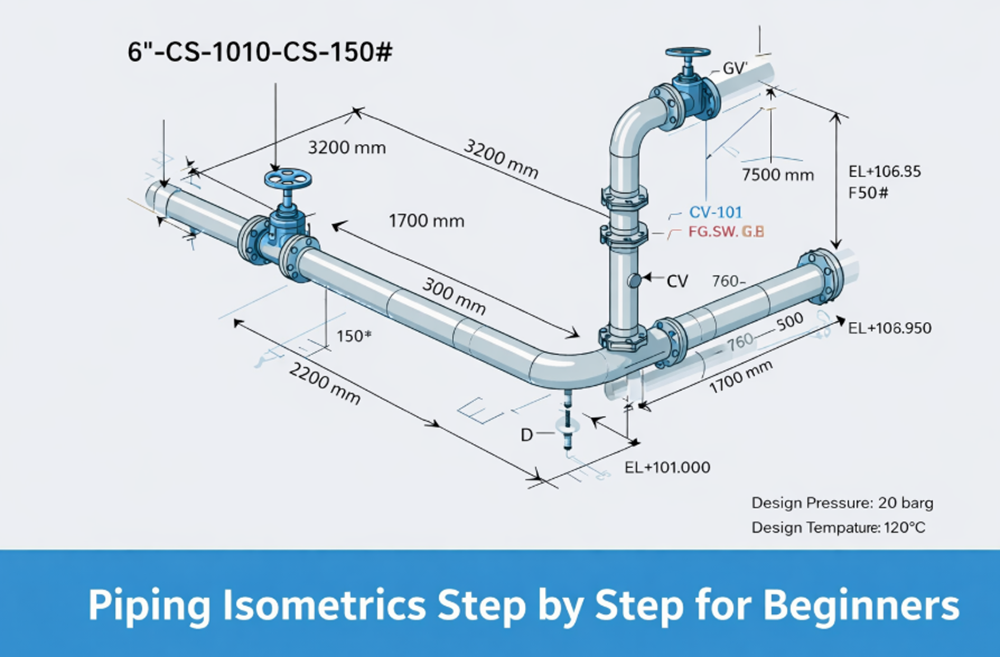
Piping isometrics step by step for beginners in piping engineering

Learn piping isometrics step by step with clear explanations designed for beginners in piping engineering. This practical guide explains piping design using real plant examples, including P&ID interpretation, line numbering system, piping class, and material specification. Based on ASME B31.1 power piping and industry best practices used in oil and gas piping projects. Ideal for … Read more
Pipe Sizing in Piping Design – Practical Engineering Approach for Oil & Gas and Process Plants

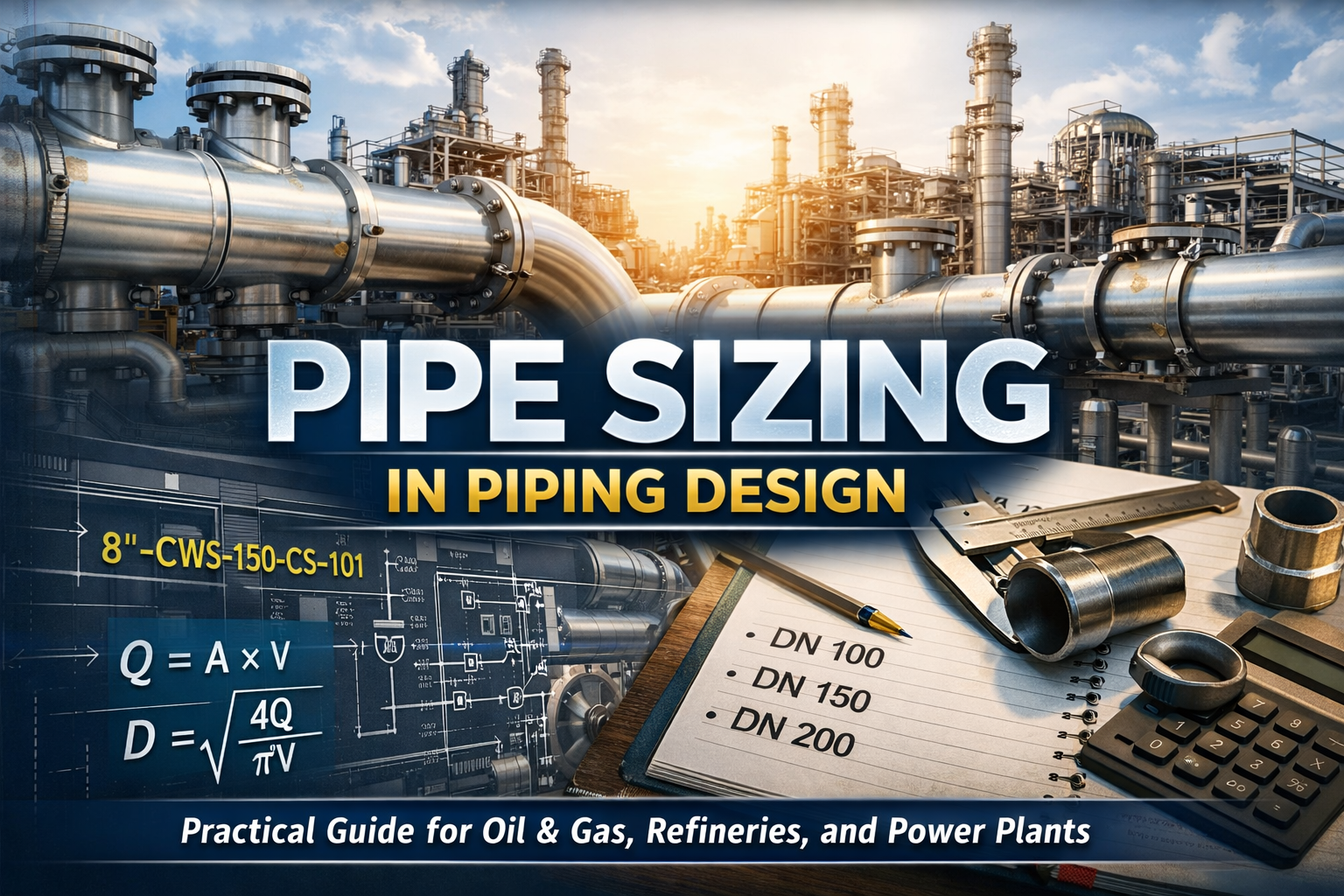
Pipe sizing in piping design showing refinery piping, P&ID drawings, and line sizing calculations for oil and gas plants

Introduction Pipe sizing is one of the most fundamental activities in piping design and piping engineering. In oil & gas facilities, refineries, chemical plants, and power plants, correct pipe sizing directly affects process performance, safety, operability, and lifecycle cost. Pipe sizing is not just a mathematical exercise. It is a combination of process requirements, fluid … Read more

Piping Components Basics: A Practical Guide for Junior Piping Engineers

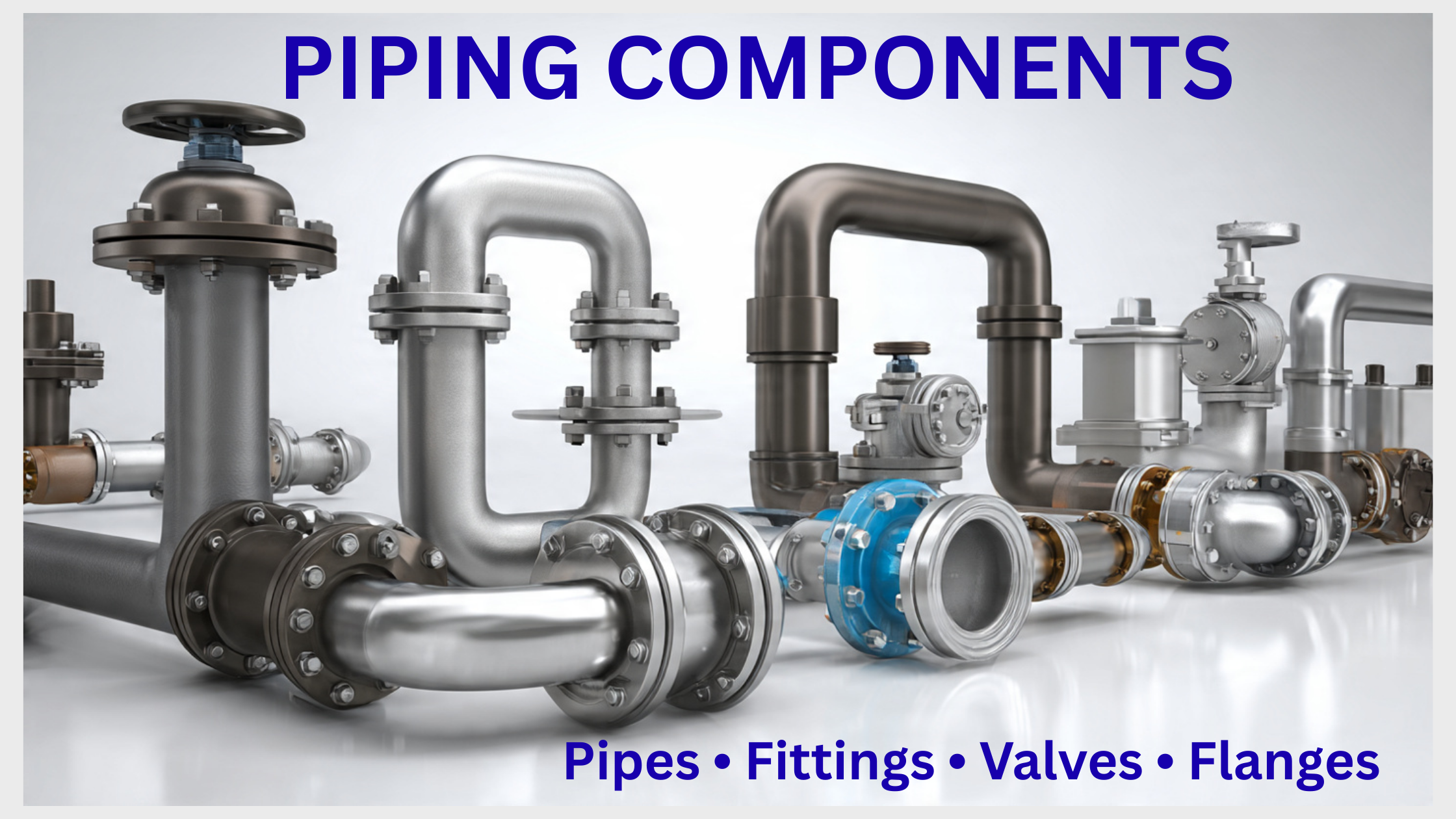
Industrial piping components including pipes, fittings, flanges, elbows, and valves used in process plant piping systems

When you first step into a plant site or start reading piping drawings, everything may look confusing—pipes going everywhere, strange symbols on drawings, and many unfamiliar names. Over time, you realize that a piping system is not just pipes. It is a collection of piping components, each with a specific role. Understanding piping components is … Read more