Introduction
When I started my career in piping engineering more than 20+ years ago, the first question my senior asked me was very simple:
“Do you really understand what piping is?”
Many beginners think piping is just pipes.
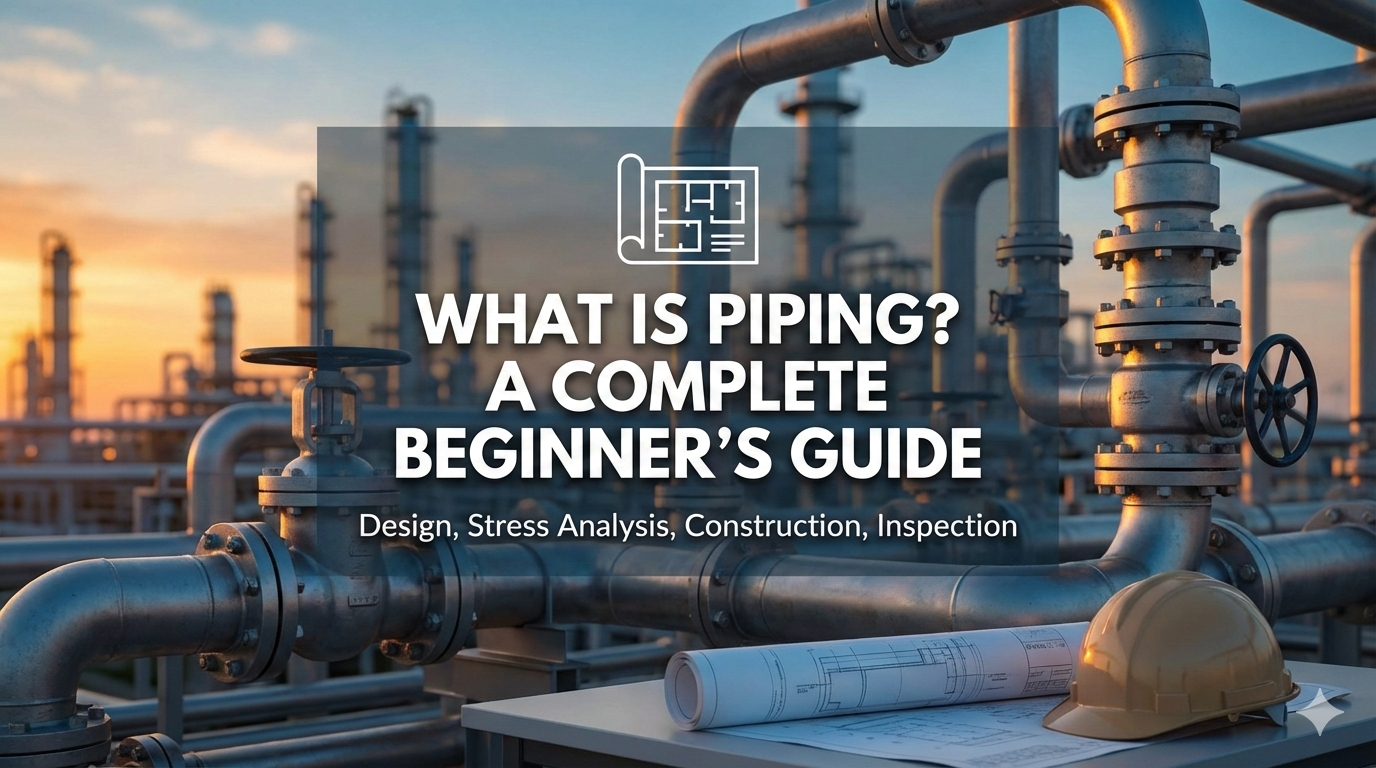
But in reality, piping is a complete engineering system, and understanding it correctly is the foundation of everything you will learn later in piping design, stress analysis, construction, and inspection.
In this article, I will explain what piping is in simple language, using real engineering language, exactly the way it is used in industries.
Table of Contents
What Is Piping?
Piping is an engineered system of pipes, fittings, flanges, valves, gaskets, and supports designed to safely transport fluids under specified design pressure, design temperature, and service conditions within industrial plants.
These fluids can be:
- Process fluids (oil, gas, chemicals)
- Utility fluids (steam, water, air)
- Hazardous or non-hazardous fluids
A piping system is designed to operate under:
- Design pressure
- Design temperature
- Specific service conditions
Piping is not random pipe routing.
It is designed, calculated, analyzed, fabricated, tested, and inspected as per engineering codes and standards.
Simple Definition:
Piping is an engineered system used to safely transport fluids between equipment within industrial plants.
Main Components of a Piping System
A piping system is made up of many components working together.
Pipes
Pipes are the primary components that carry the fluid.
Pipe size, thickness, and material depend on:
- Design pressure
- Design temperature
- Fluid type
👉 Pipe sizing concepts are explained in NPS, DN & Schedule
Fittings
Fittings are used to:
- Change flow direction (elbow)
- Change pipe size (reducer)
- Create branches (tee)
👉 Learn more in Piping Components
Flanges
Flanges are detachable joints used to:
- Connect equipment
- Allow maintenance
- Assemble piping easily
They are bolted connections using gaskets.
Valves
Valves control fluid flow within the piping system.
They can start, stop, or regulate the flow.
👉 Valve types and selection are covered in Valve Selection
Gaskets and Bolting
Gaskets and bolts ensure leak-tight flange connections under pressure and temperature
Pipe Supports
Pipe supports carry pipe weight and control:
- Thermal expansion
- Vibration
- Equipment nozzle loads
👉 Support basics are explained in Pipe Supports
Why Is Piping Design Important?
Improper piping design can lead to:
- Leakage
- Equipment failure
- Safety hazards
- Plant shutdowns
Good piping design ensures:
✔ Safety
✔ Reliability
✔ Compliance with codes
✔ Long service life
Where Is Piping Used?
Piping systems are used in:
- Oil & Gas plants
- Refineries
- Power plants
- Chemical & Petrochemical plants
- Pharma & food industries
- Water treatment plants
Piping Codes and Standards (Introduction)
Piping systems are designed as per international codes to ensure safety.
Common Piping Codes:
- ASME B31.3 – Process Piping
- ASME B31.1 – Power Piping
- ASME B31.4 – Liquid Pipelines
- ASME B31.8 – Gas Pipelines
Among these, ASME B31.3 is the most widely used code in process industries.
Simple Practical Example
Consider a refinery unit where hot oil flows from a pump to a heat exchanger.
The piping system must be designed considering:
- Design pressure
- Design temperature
- Material selection
- Pipe thickness
- Thermal expansion
- Code requirements (ASME B31.3)
This shows why piping is not just “connecting pipes” but engineering.
Common Mistakes Beginners Make
- Confusing piping with pipelines
- Ignoring code requirements
- Selecting pipe size without calculations
- Not considering temperature effects
Avoiding these mistakes is essential for a successful piping career.
FAQ
Q1: What is piping?
Answer: Piping is an engineered system used to transport fluids within industrial plants using pipes, fittings, valves, and other components.
Q2: Which ASME code is commonly used for process plants?
Answer: ASME B31.3 – Process Piping.
Summary
Piping is a critical engineering discipline that ensures safe and efficient fluid transport in industries. Understanding piping basics, components, and applicable codes is the foundation for becoming a successful piping engineer.
This article is the starting point of your piping learning journey.
References
- ASME B31.3 – Process Piping
- Piping Handbook – Mohinder Nayyar
- Process Piping Design Handbook
6 thoughts on “What Is Piping? Complete Beginner Guide to Piping Engineering”